
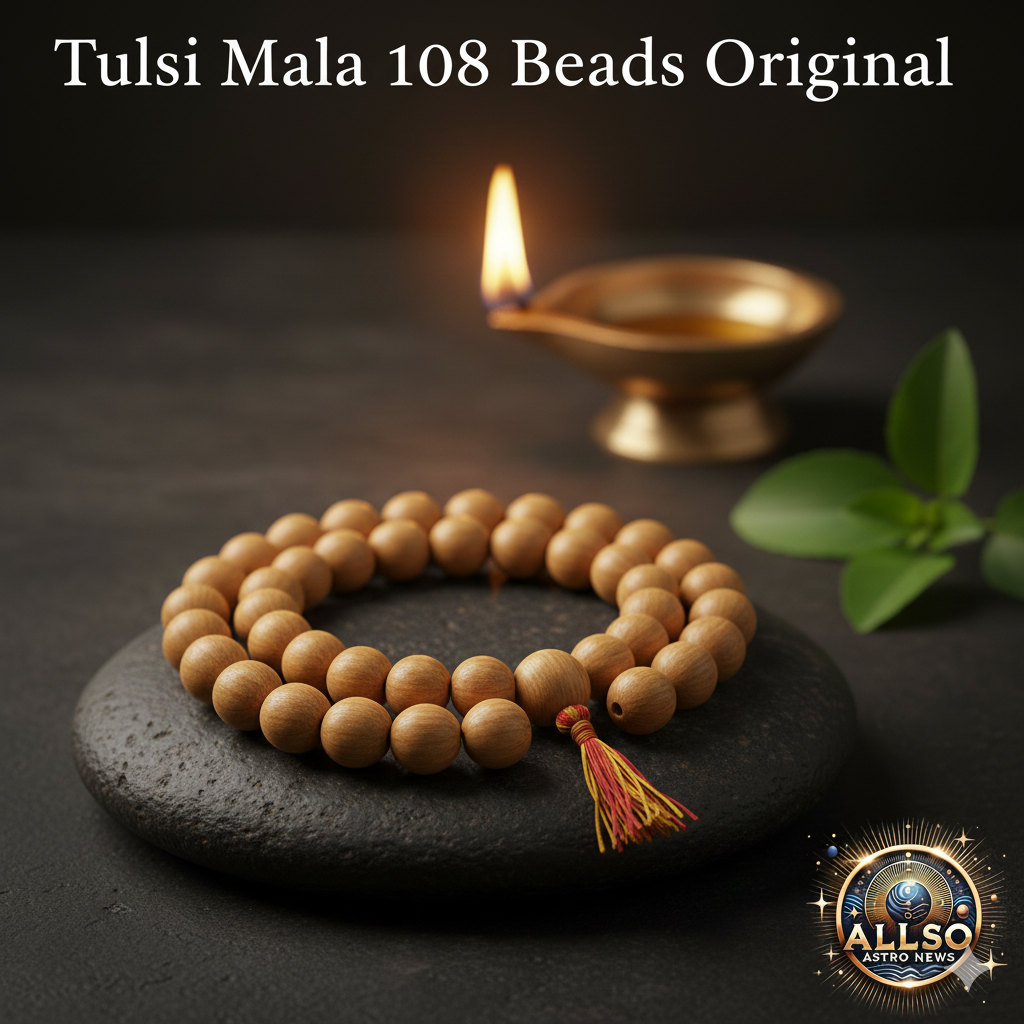




Tulsi Mala 108 Beads: A Comprehensive Guide to Sacred Spirituality and Divine Blessings
The Tulsi Mala (Holy Basil rosary) with 108 beads stands as one of the most sacred and powerful spiritual tools in Hindu tradition. This divine garland is not merely a religious object but a complete instrument for spiritual advancement, mental peace, and physical well-being. In Hinduism, particularly within the Vaishnava tradition, Tulsi is considered dear to Goddess Lakshmi and Lord Vishnu. Wearing or using a Tulsi Mala for chanting is regarded as highly auspicious and spiritually rewarding.
Religious and Spiritual Significance of Tulsi
Tulsi is worshipped as a "Goddess" in Hinduism. According to the Puranas, Tulsi is the incarnation of Goddess Vrinda, who was a supreme devotee of Lord Vishnu. Due to her unwavering devotion and purity, she was blessed with immortality in the form of the Tulsi plant. This is why Tulsi is also called "Vishnu Priya" (beloved of Vishnu).
In Vedic scriptures, Tulsi is addressed by numerous names such as "Surasa," "Devadundubhi," "Aparajita," and "Vrinda." Each name reflects Tulsi's specific powers and qualities. The Tulsi plant is considered a potent source of not only medicinal properties but also spiritual energy.
Tulsi leaves and the Tulsi Mala hold special significance in the worship of Lord Krishna and Lord Rama. It is said that worship of Vishnu is incomplete without Tulsi. Even the worship of Shaligram is not considered complete without Tulsi. Wearing a Tulsi Mala makes a person eligible for Lord Vishnu's special grace.
The spiritual essence of Tulsi transcends mere ritualistic worship. It represents purity, devotion, and the transformation of the soul. The plant itself is considered a manifestation of divine consciousness, and wearing its beads is believed to connect the devotee directly with the Supreme Divine.
The Mystical Science Behind 108 Beads
The number 108 in a Tulsi Mala is not arbitrary but has profound spiritual and scientific significance. This sacred number is revered across Hinduism, Buddhism, and Jainism for multiple reasons:
Astronomical Significance: The distance between the Sun and Earth is approximately 108 times the Sun's diameter. Similarly, the distance between the Moon and Earth is approximately 108 times the Moon's diameter. This cosmic relationship lends special significance to the number 108.
Chakras and Nadis: According to yogic science, there are 108 major nadis (energy channels) in the human body that converge at the heart chakra. Through these nadis, prana (life force) flows throughout the body. Chanting on 108 beads activates energy circulation through all these channels.
Mathematical Perfection: The number 108 is divisible by 1, 2, 3, 4, 6, 9, 12, 18, 27, 36, and 54. This mathematical completeness makes it special. Additionally, 1+0+8=9, and nine is considered the symbol of spiritual completeness.
Sanskrit Alphabet: There are 54 letters in the Sanskrit alphabet, each having a feminine (Shakti) and masculine (Shiva) form, totaling 108. During mantra chanting, all these sound vibrations become activated.
Upanishads: The Vedic tradition recognizes 108 Upanishads, which are sources of supreme knowledge. Chanting 108 times symbolizes connecting with this complete wisdom.
Astrological Connection: There are 12 zodiac signs and 9 planets in Vedic astrology. When multiplied (12 x 9), they equal 108, representing the complete cosmic influence.
Marma Points: Ayurveda identifies 108 marma points (vital energy points) in the human body. These are sacred junction points where consciousness meets matter.
The mala contains one additional bead called "Meru" or "Sumeru." This 109th bead is the central point of the mala and is not crossed during chanting. The Meru represents the guru or divine consciousness, and when 108 beads are completed during japa, the practitioner reverses the mala and begins chanting from the opposite direction.
Types of Tulsi Mala and Their Characteristics
There are two main species of Tulsi plant - Krishna Tulsi (black/purple Tulsi) and Rama Tulsi (green or white Tulsi). Malas are made from both types, and each has its distinct energy and properties.
Krishna Tulsi Mala: This is deep purple or black in color and is especially auspicious for worshipping Lord Krishna. Krishna Tulsi mala is considered more powerful and is also used for tantric practices, enemy removal, and protection from negative energies. This mala helps practitioners achieve deep meditative states and is particularly effective for spiritual warriors seeking transformation.
Rama Tulsi Mala: This is light green or cream-colored and is suitable for worshipping Lord Rama and general spiritual practice. Rama Tulsi mala is considered more gentle and calming. It promotes mental peace, emotional balance, and positive energy. This variety is ideal for beginners and those seeking gentle spiritual progress.
Both types of malas are equally sacred and powerful spiritually. The choice depends on personal preference, the deity being worshipped, and the purpose of the practice. Some advanced practitioners use both types for different purposes—Krishna Tulsi for intensive sadhana and Rama Tulsi for daily devotional practice.
Crafting and Sanctity of Tulsi Mala
Traditional Tulsi Mala is made from the branches or stem of the Tulsi plant. Before cutting the plant, prayers are offered seeking forgiveness, and appropriate Vedic mantras are recited. The Tulsi stem is cut into small pieces, then each piece is dried and a hole is made to create a bead.
The beads are traditionally strung on cotton or silk thread. Some malas use metal wire, but natural materials are considered more auspicious. While making the mala, purity and devotion are maintained, often with mantras being chanted while threading the beads.
Some high-quality Tulsi malas are energized through special rituals and worship. Tulsi malas obtained from sacred pilgrimage sites like Vrindavan, Ayodhya, Haridwar, and other holy places are considered especially powerful because they carry the spiritual energy of those sacred lands.
The craftsmanship involves not just physical assembly but spiritual intention. Artisans who create Tulsi malas often observe fasts, maintain ritual purity, and infuse each bead with sacred mantras. This traditional process ensures that the mala carries maximum spiritual potency from its very creation.
Method and Rules for Wearing Tulsi Mala
Wearing a Tulsi Mala is a sacred process that requires following certain important rules:
Time of Wearing: Before wearing a Tulsi Mala for the first time, it should be washed with Ganga water or pure water and worshipped by placing it before Lord Vishnu or your chosen deity. Wearing the mala for the first time on Ekadashi, full moon day, or during an auspicious muhurta is highly fruitful.
Position of Wearing: Wearing the Tulsi Mala around the neck is considered most auspicious. It remains near the heart chakra and channels spiritual energy directly into the heart center. Some practitioners also wear it on the hand or forehead, especially during meditation and chanting.
Maintaining Purity: The Tulsi Mala should always be kept pure. It should be removed when going to toilets or impure places. In some traditions, it is advised to remove the mala before sleeping at night and place it in the worship area. However, many practitioners continue to wear it continuously.
Dietary Considerations: Those wearing Tulsi Mala should adopt a sattvic lifestyle. Non-vegetarian food, alcohol, and other tamasic habits should be avoided because Tulsi is extremely pure and sattvic.
Mantra Chanting: While chanting on the mala, use the middle finger (madhyama) and thumb of the right hand. The index finger (tarjani) should not be used as it represents ego. The mala should be held near the heart or above the navel during chanting, not on the ground.
Respect and Reverence: The mala should never be placed on the ground or in unclean places. It should not be worn during activities that are considered impure in traditional contexts. Treating the mala with respect enhances its spiritual effectiveness.
Medicinal and Scientific Properties of Tulsi Mala
Tulsi is called the "Queen of Herbs" in Ayurveda. Modern science has also validated Tulsi's numerous medicinal properties:
Immune System: Tulsi contains antioxidant, antibacterial, and antiviral properties. Wearing the Tulsi Mala around the neck allows its subtle medicinal energy to be absorbed through the skin, strengthening the immune system.
Respiratory Health: The subtle compounds emanating from Tulsi help maintain healthy respiratory passages. Wearing the mala can provide relief from cough, cold, and asthma-like problems.
Stress Reduction: Tulsi has adaptogenic properties that help regulate stress hormones. Continuous contact with the mala improves mental peace and emotional balance.
Heart Health: Tulsi is beneficial in controlling blood pressure and reducing cholesterol. A mala worn around the neck remains near the heart chakra, benefiting cardiac health.
Skin Health: Tulsi's antiseptic properties help maintain healthy skin. Skin that comes in contact with the mala may become healthier and more radiant.
Modern research has found that Tulsi contains active compounds like eugenol, carvacrol, linalool, and beta-caryophyllene, which provide various health benefits. These compounds have been scientifically proven to have anti-inflammatory, antimicrobial, and therapeutic properties.
Tulsi Mala in Worship of Various Deities
The Tulsi Mala is used in the worship and mantra chanting of various deities:
Lord Vishnu and His Avatars: The Tulsi Mala is supreme for worshipping Vishnu, Krishna, Rama, Narasimha, and other avatars. Chanting "Om Namo Bhagavate Vasudevaya" and the "Hare Krishna Mahamantra" on Tulsi Mala is especially fruitful.
Goddess Lakshmi: Tulsi is extremely dear to Goddess Lakshmi. For wealth, prosperity, and good fortune, the mantra "Om Shreem Mahalakshmyai Namah" should be chanted on Tulsi Mala.
Lord Hanuman: Tulsi Mala can also be used in worshipping Lord Hanuman. Chanting Hanuman Chalisa or "Om Ham Hanumate Namah" on Tulsi Mala provides strength and courage.
Radha-Krishna: Tulsi Mala has special significance in the combined worship of Radha-Krishna. It is ideal for devotional practice focused on divine love and bhakti.
Lord Shiva: Although Rudraksha mala is more popular for Lord Shiva's worship, some traditions use Tulsi Mala, recognizing the unity of Shiva-Vishnu.
The versatility of Tulsi Mala across different forms of worship demonstrates its universal spiritual potency. It is one of the few sacred objects that is accepted and revered across various Hindu traditions and sects.
Care and Preservation of Tulsi Mala
Since Tulsi Mala is made of wood, proper care is essential:
Cleaning: The mala should be periodically washed with Ganga water or pure water. Do not use chemical soap or detergent. After washing, dry it in sunlight but avoid excessive heat.
Applying Oil: To keep the Tulsi Mala shiny and strong for a long time, sandalwood oil or sesame oil can be occasionally applied. Apply oil lightly and wipe with a soft cloth.
Storage: When the mala is not in use, wrap it in clean cloth or keep it in a small pouch. It should be kept in a worship area or sacred place. Protect from direct sunlight and moisture.
Broken Mala: If the mala breaks, it should be immersed in a holy river, near a Tulsi plant, or under a Peepal tree. Throwing the mala in garbage is considered inauspicious and disrespectful.
Energy Restoration: The mala's energy can be revitalized periodically by keeping it in moonlight on a full moon night or placing it before the deity in a temple.
Regular maintenance not only preserves the physical integrity of the mala but also maintains its spiritual potency. A well-cared-for Tulsi Mala can last for years and becomes even more powerful with continued use and devotion.
Tulsi Mala in Meditation and Yoga Practice
Tulsi Mala is an integral part of meditation and yoga practice. When a practitioner chants mantras on the mala, the beads slip through the fingers, and this rhythmic movement helps deepen meditation. This technique keeps the mind focused and prevents thoughts from wandering.
Japa Meditation: Mala japa is one of the most ancient and effective meditation techniques. Chanting the mantra once on each bead, the practitioner gradually enters a deep meditative state. The complete cycle of 108 repetitions calms and centers the mind completely.
With Pranayama: Some practitioners combine mala japa with pranayama. Mentally chanting the mantra while inhaling and moving one bead forward while exhaling—this technique synchronizes breath and mantra.
Chakra Activation: Specific bija mantras can be chanted with the Tulsi Mala to activate different chakras. Being worn around the neck, it particularly affects the Vishuddha chakra (throat chakra) and Anahata chakra (heart chakra).
Silent Meditation: Some advanced practitioners perform silent meditation simply by holding the Tulsi Mala in hand or wearing it around the neck. The mere presence of the mala brings depth to meditation.
The tactile sensation of moving through the beads creates a physical anchor for the wandering mind, making it easier to maintain concentration during extended meditation sessions.
Relevance of Tulsi Mala in Modern Life
In today's stressful and fast-paced life, the relevance of Tulsi Mala has increased even more:
Stress Management: In a busy lifestyle, wearing a Tulsi Mala and chanting for a few minutes daily is a simple and effective way to reduce stress.
Positivity: The mala's spiritual energy helps dispel negative thoughts and develop a positive outlook.
Spiritual Connection: To remain connected with spiritual roots in a materialistic world, Tulsi Mala is a simple medium. It helps integrate spirituality into daily life.
Identity: Many people wear Tulsi Mala as a symbol of their spiritual identity and connection with the Vaishnava tradition.
Health Awareness: With growing interest in natural and holistic health, the medicinal benefits of Tulsi Mala are also being appreciated.
Digital Detox: In an age of constant digital stimulation, the practice of mala japa offers a meditative break, helping reset the nervous system and reduce screen fatigue.
Top 5 Benefits of Tulsi Mala 108 Beads
1. Profound Spiritual Advancement and Development of Devotion
The most important benefit of Tulsi Mala is spiritual growth and increased devotion. Being extremely dear to Lord Vishnu, wearing Tulsi Mala grants the devotee special grace and blessings from the Lord. This mala awakens devotional feelings in the wearer's heart and deepens the spirit of surrender to God.
Regular chanting on Tulsi Mala purifies the mind and expands spiritual consciousness. It elevates the practitioner above worldly attachments and leads toward higher spiritual experiences. The Puranas state that a person wearing Tulsi Mala becomes eligible for a place in Lord Vishnu's abode.
During meditation and chanting, Tulsi Mala provides remarkable depth. Its sacred energy helps the practitioner reach states of samadhi (spiritual absorption). For practitioners seeking moksha (liberation) or self-realization, Tulsi Mala is an essential tool. It not only helps in spiritual progress in the current life but also assists in purifying karmas from past lives.
The mala acts as a constant reminder of one's spiritual goals and divine connection. It creates a sacred space around the wearer, attracting positive spiritual influences and divine grace. Many saints and devotees have attained enlightenment through consistent practice with Tulsi Mala, making it a proven instrument of spiritual transformation.
2. Mental Peace, Clarity, and Emotional Balance
Amid the complexities and stresses of modern life, Tulsi Mala is a powerful source of mental peace. Wearing the mala and chanting on it brings peace and stability to the mind. Tulsi's sattvic energy is extremely effective in removing mental restlessness, anxiety, depression, and negative thoughts.
Chanting mantras on the mala is a form of active meditation that focuses and calms the mind. When the mind repeatedly focuses on the same sacred mantra, the crowd of unnecessary thoughts diminishes and mental clarity increases. This clarity helps in better decision-making, problem-solving, and directing life in the right direction.
Tulsi Mala is also helpful in emotional healing. It helps control anger, jealousy, fear, and other negative emotions. The mala's cool and gentle energy brings emotional balance, making a person more patient, compassionate, and understanding. For people struggling with sleep problems, Tulsi Mala is also beneficial as it calms the mind and aids in deep, restful sleep.
The practice of mala japa creates a neurological pattern of calmness. Scientific studies on meditation and repetitive mantra chanting have shown that such practices reduce cortisol levels (stress hormone) and increase the production of feel-good neurotransmitters like serotonin and dopamine. The Tulsi Mala enhances these benefits through its inherent spiritual and medicinal properties.
3. Physical Health and Strengthening of the Immune System
Due to Tulsi's countless medicinal properties, wearing Tulsi Mala results in remarkable improvement in physical health. The antioxidant, antibacterial, antiviral, and anti-inflammatory properties present in Tulsi strengthen the body's immune system. When the mala is worn around the neck, its subtle medicinal energy enters the body through the skin.
Tulsi Mala is especially beneficial for respiratory health. It provides relief from throat infections, cough, cold, asthma, and other respiratory problems. Being worn around the neck, the mala directly affects the respiratory tract and keeps it healthy. For people who frequently suffer from throat problems, Tulsi Mala is a natural remedy.
Tulsi is also beneficial for heart health. It helps control blood pressure, reduce cholesterol, and improve blood circulation. The mala's proximity to the heart chakra enhances these benefits. Additionally, Tulsi helps maintain a healthy digestive system, expel toxins, and increase overall vitality. Regular wearing of the mala increases energy levels in the body, and the person feels healthier and more active.
Research has shown that the compounds in Tulsi have cardioprotective effects, helping prevent heart disease. The anti-inflammatory properties reduce chronic inflammation in the body, which is linked to numerous diseases including diabetes, arthritis, and cancer. By wearing Tulsi Mala, you're essentially carrying a natural pharmacy that continuously supports your body's healing mechanisms.
4. Protection from Negative Energies and Purification of Aura
Tulsi Mala functions as a powerful protective talisman. Vedic scriptures and folk traditions hold the belief that wearing Tulsi Mala provides protection from evil eye, negative energies, ghosts, and other invisible negative forces. Tulsi's divine and pure energy creates a protective shield that safeguards the wearer from harmful influences.
Wearing the mala purifies and strengthens a person's aura. The aura is the energy field around our body that reflects our physical, mental, and spiritual state. Tulsi's sattvic energy removes impurities and negativity present in the aura, making the person feel more positive and energetic.
For people who work in environments where there is high negativity, jealousy, or stress, Tulsi Mala is especially beneficial. It keeps them unaffected by surrounding negative energies and helps maintain a positive mental state. A sacred and positive environment is created around the person wearing Tulsi Mala, which benefits not only them but also people around them.
The mala acts as an energetic filter, preventing psychic attacks and energy drainage. In today's world where we're constantly bombarded with various electromagnetic frequencies from devices and exposed to emotional pollution from crowded environments, the Tulsi Mala serves as a spiritual shield that maintains our energetic integrity and personal boundaries.
5. Karma Purification, Sin Destruction, and Improvement of Destiny
One of the most profound and long-term benefits of Tulsi Mala is karma purification and sin destruction. Scriptures state that wearing Tulsi Mala and chanting God's name on it destroys sins from past lives and the current life. This process gradually but surely lightens the burden of karmas and leads the person toward spiritual liberation.
When karmas are purified, positive changes naturally begin to occur in life. Obstacles and struggles in life diminish, and destiny improves. The person wearing Tulsi Mala receives unexpected good fortune, opportunities, and blessings. This mala is especially beneficial for those who have been struggling with difficulties for a long time or whose life seems stagnant for some reason.
Tulsi Mala also helps reduce planetary afflictions. According to Vedic astrology, Tulsi pleases all planets, especially Moon and Venus. Wearing the mala and chanting mantras reduce the negative effects of planets and bring harmony to life. It brings positive results in all areas including wealth, relationships, health, and career.
Tulsi Mala is also beneficial for the peace of ancestors' souls. People suffering from Pitru Dosha should chant Gayatri Mantra or Mahamrityunjaya Mantra on Tulsi Mala. This provides peace to ancestors' souls and increases the flow of positive energy in the lineage.
The concept of karma purification through Tulsi Mala is deeply rooted in the understanding that consistent spiritual practice, combined with the inherent purity of Tulsi, creates a transformative force. Each bead touched with devotion, each mantra chanted with sincerity, creates ripples in the karmic field, gradually dissolving negative patterns and attracting divine grace. This is not superstition but a profound spiritual technology that has been validated by countless practitioners over millennia.
Conclusion: Keeping a Sacred Tradition Alive
The Tulsi Mala with 108 beads is not just a religious object but a living symbol of Indian spiritual heritage. It is a wonderful combination of ancient wisdom, devotion, medicinal science, and spiritual power. In the modern age, when life is becoming increasingly materialistic and stressful, Tulsi Mala is a simple yet powerful medium to keep us connected to our spiritual roots.
Wearing Tulsi Mala is a lifestyle choice—a lifestyle that values sattvikta (purity), devotion, and spiritual development. This mala reminds us that along with material success, spiritual advancement is also an important purpose of life.
Whether you are a serious practitioner, a devotee, or simply searching for peace and positivity in life, Tulsi Mala can be an invaluable companion. Wear it with reverence and faith, chant regularly, and let its divine energy transform your life. Tulsi Mala will accompany you not only in this life but also in the afterlife, leading you toward supreme peace and liberation.
The practice of wearing and using Tulsi Mala is a bridge between the ancient and the modern, the material and the spiritual, the individual and the divine. It represents an unbroken tradition of devotion that has sustained millions of seekers on their spiritual journey. By embracing this sacred practice, you join a timeless lineage of devotees who have found solace, strength, and salvation through the grace of Tulsi and the divine love of Lord Vishnu.
"Yasya Smaranamaatrena Janma Samsara Bandhanaat | Vimuchyate Namastasmai Vishnave Prabhavishhnave ||"
"Salutations to that all-powerful Lord Vishnu, by whose mere remembrance one is freed from the bondage of birth and death. Tulsi Mala is the sacred path leading toward this supreme truth."
May the divine blessings of Tulsi and Lord Vishnu illuminate your path and fill your life with peace, prosperity, and spiritual fulfillment.